
We’ve all been there.
You’re sitting on the bus, aimlessly staring out the window, fantasising about the future.
Maybe a small aspect of it, will we still eat pizza in 2050 or will robots drive our buses?
But then you get off the bus and go to work and your fantasy fades while you wonder why your computer always updates when you are in the middle of an email.
TimesUp from the obscure Austrian city of Linz, have come to our island to give us a chance to engage with ‘Futuring’ in a structured way, as part of Malta’s EU Presidency.
Pushing the boundaries and dedicating time to construct possible or impossible futures, then designing specific outcomes to communicate glimpses of that future. But why?
In the post Ts(Truth, Trump and Trolling) era, it is easy to lose hope and slip into a state of lethargy.
But what if the idea of the future of the world didn’t seem so overwhelming?
The three workshops TimesUp is organising are doing just that.
They are designed to disseminate the tools for ‘Futuring’. This includes breaking down ideas into smaller segments, focusing on one aspect of the future and then fleshing out this idea in small groups of people.
Often, the future is shaped by the limits of our imagination. Extending that imagination is extending possibilities. Once we have explored a territory in our mind, it is much easier to go there or strive for it in practise. The unimaginable, becomes a possibility.
Two workshops have already taken place, one on post citizenship and one of imagining future projects. A third is planned. Follow their imposing pirate flag and you cannot miss it.
The guys from the ‘Extrapolation Factory’ were invited by TimesUp to give the second workshop.
Their expertise lies in ‘democratising future studies’. Sounds complicated but all it means is bringing us the tools to image futures in a structured way. They work from Brooklyn but give workshops over the world (Moscow, London and many more fancy cities).
Dissecting the idea of ‘the future’ into smaller segments and giving individuals the chance to create this, reminds us that we have agency and that we can influence the future.
The outcomes are fascinating.
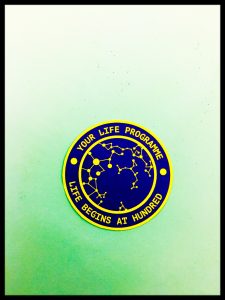
Ranging from the idea of a Data Incineration Authority, in an age where data protection and privacy are worrying more and more people to a programme catering for our future ageing population (‘Life begins at 100’).
What if breastfeeding clinic worked like a sperm bank, so you can pop in and drop off some of your breast milk to benefit someone else’s infant, eliminating the idea that availability of breastmilk has anything to do with the gender(s) of the parent(s). Breast Reset incorporates both a move back to basics, away from chemical to natural products, but also the idea of a more gender balanced society, where LGBTIQ couple’s adopted kids can also benefit from the antibodies found in breastmilk.
Some futures seem less far away, while others are based on assumptions about technology that is yet to be invented.
Geopolis addresses resource scarcity and food security issues that are on the increase due to erratic climate conditions. Information is already a resource, but in this future ‘information energy’ can be converted into organic material. Hungry? How about a future where every EU citizens can grow broccoli from their wrist watch?
Asked about the progress of their project, Tina and Tim from TimesUp smile, sleep deprived but happy. ‘Futuring is not about predicting, it’s about visioning’ Tina explains. So whether abstract or realistic, each idea gives us a taste of the issues people living on the islands are thinking about.
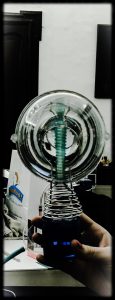
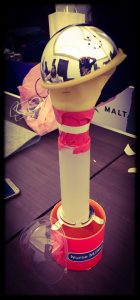
When the idea is developed, participants design products, logos and videos showcasing their ideas within the three day workshop. These final outcomes then give spectators a taste of the original idea and the future this idea represents.
Decentralization and artificial intelligence are often trends, but we also have more playful ideas that do not necessarily involve a high tech future. Both distopian and utopian future scenarios are explored.
The workshops are targeting a variety of sectors from the Maltese public. Graphic designers, photography experts, visual artists and activists are rubbing shoulders.
Artist Glen Calleja participated in all of them. He feels that the EU Presidency’s involvement of TimesUp ‘reflects an openness to experiment with new modes of citizenship’ which is commendable, especially in the current political climate.
The process is imperative, but there will also be able to see concrete outcomes.
MCAST art and design in Mosta supported the process and Media studies department lecturers showed extra commitment by coming in on a Sunday to facilitate the process of film making.
But don’t be fooled, there are many ways in which glimpses into the future have been created.
A public exhibition will be staged at Studio Solipsis in Rabat exhibiting the outcomes of all workshops and small tasters or satellites will be presented around Valletta.
Not to be missed!